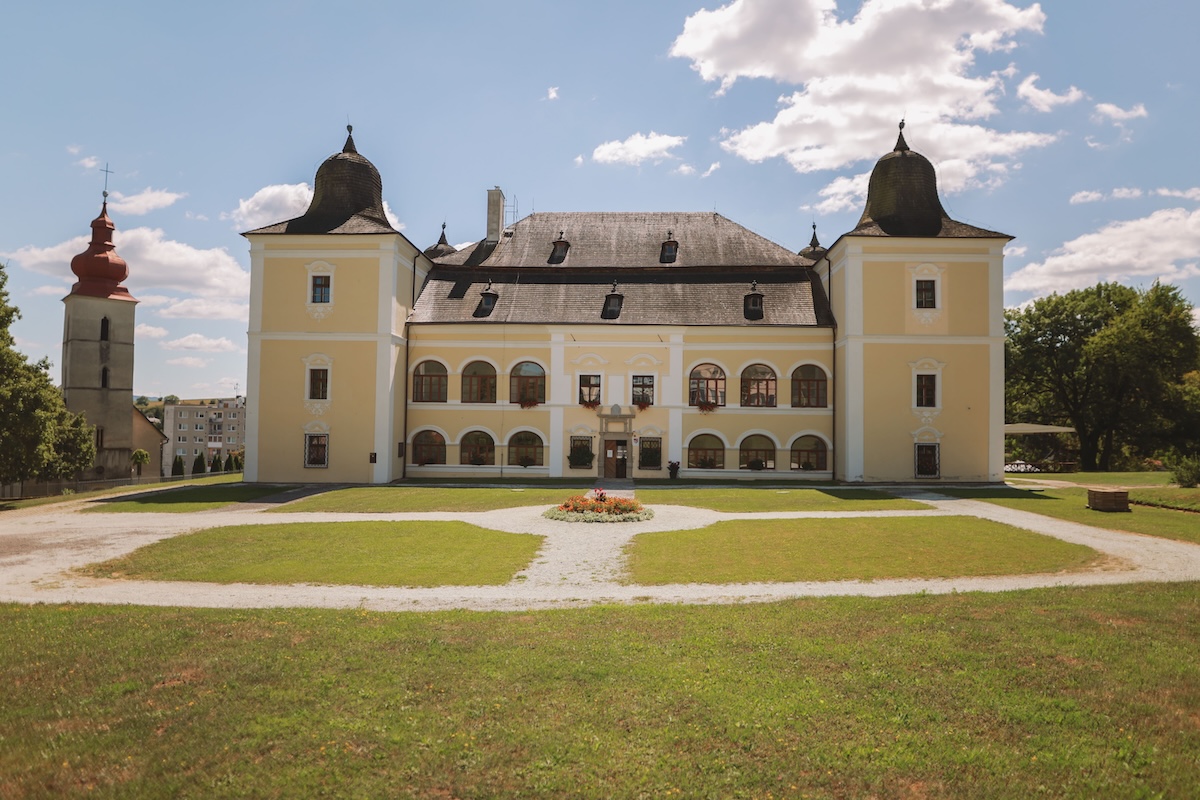
One of the most beautiful Baroque manor houses Prešov Region With its four towers, it dominates the picturesque little town below Through the Slanské Hills - Hanušovce nad Topľou.
The owners of the manor house
At the turn of the 17th and 18th centuries, the Dessewffy family became the new owners of Hanušovce. The imposing Renaissance-Baroque style manor house was commissioned by the brothers Jozef and Tomáš Dessewffy, who were in the service of Maria Theresa, Queen of Hungary (1740–1780). This is recorded in a Latin inscription on a marble plaque currently located inside the manor house.
The owners of the manor house – the Dessewffy family – came from Černek, in the Požega region of Western Slavonia (eastern Croatia). At the beginning of the 16th century, during the Turkish raids, the Dessewffy family’s estate also fell into Turkish hands. Ján Dessewffy therefore set off for Bratislava with several documents from the family archive. Following the Battle of Mohács (1526), a struggle for the Hungarian throne began between Ján Zápoľský and Ferdinand of Habsburg. The Dessewffys had always been loyal to the king, and Ján, too, upheld this tradition; although he was not a soldier, he entered the political service of King Ferdinand. He served as the king’s chamberlain, confidant, a member of the Order of the Knights of Rhodes, a councillor, and later also as president of the Hungarian Chamber and administrator of the royal court in Bratislava. King Ferdinand duly rewarded Ján Dessewffy for his loyalty by granting him the estates belonging to Kamenica Castle (Kamenica nad Torysou). The owners of the Great Manor House in Hanušovce also hailed from this Kamenica branch of the Dessewffy family.
The appearance of the manor house
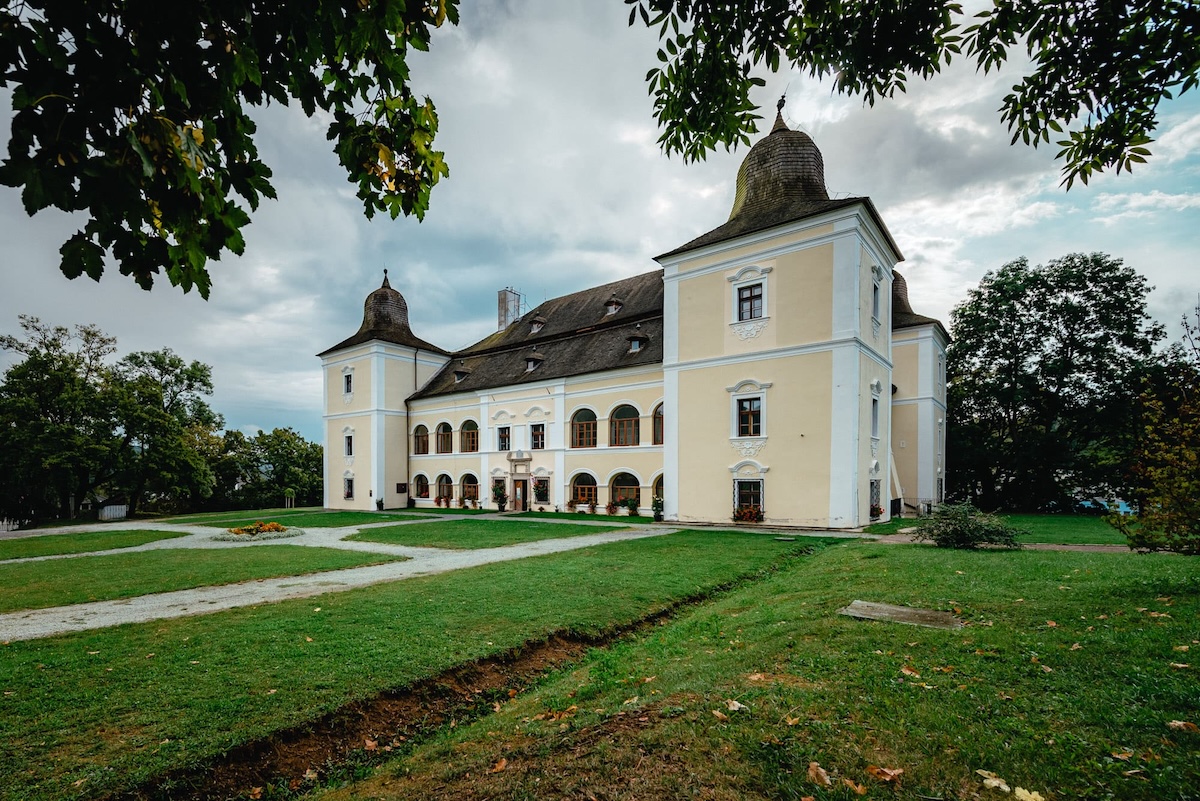
The two-storey block-style building, with its richly stuccoed windows, was set amongst the greenery of the park, fragments of which have survived to this day. The layout of the rooms inside the manor house reflects the application of the Baroque principle of axial symmetry. The rooms feature barrel vaults with lunettes. The vaulted fields are richly decorated with stucco. Externally, the building’s silhouette is defined by the interplay of the mansard roof and the bell-shaped roofs of the towers, which lend a rhythmic quality to the architecture. The stucco decoration of the windows is also rich. The main entrance portal has side pilasters with a supraport, which originally housed an inscription plaque (now kept in the museum), and a gable with stone coat of arms The Dessewffys.
The manor house complex also included an extensive park, which was created in the late 19th century by converting the original ornamental garden from the mid-18th century, which had a formal layout; its most valuable section was situated on the terraces in front of the south-eastern façade of the manor house. The terraced layout was based on the natural configuration of the terrain, and the garden architecture drew on Baroque stylistic elements. It was preserved in this form until the mid-19th century, when the formal garden was converted into a natural landscape park, the original vegetation structure of which is partly preserved to this day.
The Great Manor House is currently the seat of Local History Museum Hanušovce nad Topľou, which is responsible for documenting the history and natural heritage of the Vranov nad Topľou district.
Hanušovce nad Topľou Manor House – The Grand Manor House is part of The Castle Roads of Šariš
Source: The Town of Hanušovce nad Topľou
Photo source:OOCR RŠ
Map
Gallery
Information
You can get here by car via the main road through Hanušovce; enter „Kaštieľ Hanušovce“ or „Tripolitana – Kaštieľ Hanušovce“ into your sat-nav.
The manor house is also accessible on foot from the railway station in about 10 to 15 minutes.
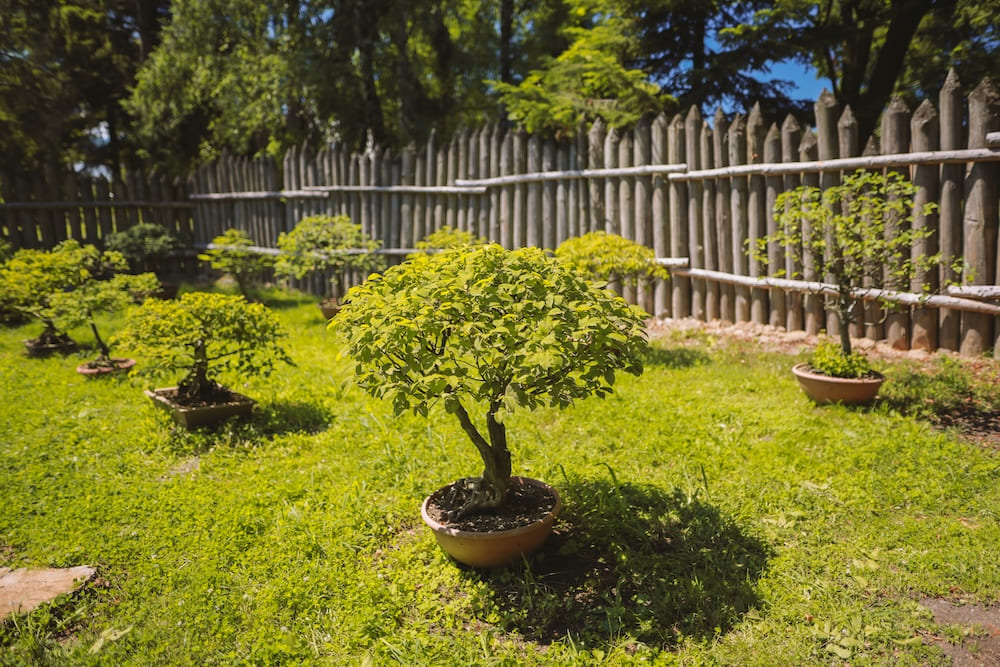
The manor house is home to a branch of the Prešov Regional Museum. However, the interior is currently undergoing renovation and the building is provisionally partially closed until the end of 2027. Visitors can view the archaeological exhibition and the adjacent archaeological park.
The manor house stands in the town centre, where you’ll also find the Archeopark, the "Little" Manor House and the Church of the Assumption of the Virgin Mary.